
%402x.svg)
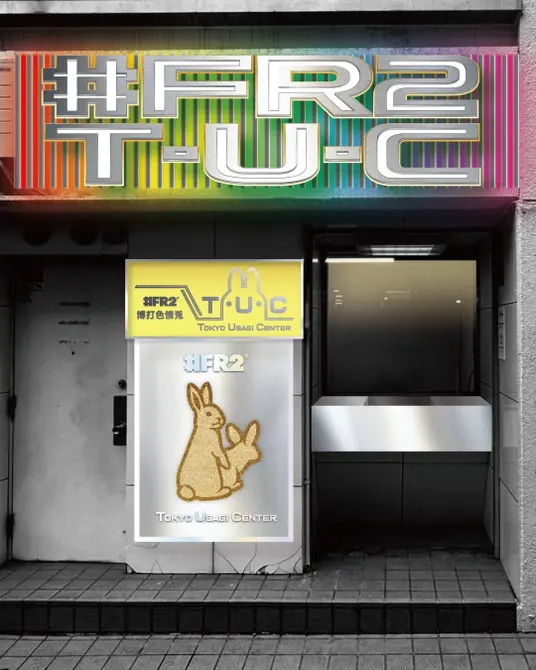
Retail Concept Based on Pachinko Booth
On May 2, 2026, Japanese streetwear brand #FR2 opened #FR2 T・U・C, a new concept store in Tokyo's Jimbocho district. Located in a former pachinko exchange booth, the store recreates the exchange-counter experience through glass-partitioned customer interactions and dedicated product handover windows.
The permanent store operates on irregular schedules announced through social media, and all merchandise is exclusive to the location.

Creating an Exclusive Purchasing Experience
The significance of this initiative lies not in opening another concept store, but in how #FR2 applies a long-standing brand strategy to physical retail operations.
Since its launch, #FR2 has built its brand through distinct visual communication on social media, limited-product releases, and a policy of avoiding discount sales. The brand has also experimented with alternative sales formats, including the mobile retail concept #FR2DOKO? and the 24-hour limited sales model used by #FR2 GOLF, demonstrating a consistent focus on how products are sold rather than solely on the products themselves.
The new store follows the same approach by emphasizing the purchasing process rather than the merchandise alone. By utilizing a former pachinko exchange booth and incorporating glass-partitioned customer interactions, irregular opening schedules, store-exclusive merchandise, and a slot-machine system that grants purchase rights for select items, the store offers an experience that differs from a conventional apparel retail environment.
The store is also notable because its location, customer interaction model, and sales rules are designed around a shared concept. In Japan, pachinko prize exchange booths are typically small, discreet locations separated from the main gaming area. Because they are associated with limited visibility and restricted customer access, they evoke a sense of secrecy and exclusivity.
#FR2 incorporates these characteristics into its retail concept through irregular opening dates, social media announcements, and intentionally limited access to selected products, making store operations part of the overall brand experience.
The core strategy is not the sale of exclusive products, but the creation of differentiation through the purchasing process itself. Rather than relying solely on merchandise, the initiative uses store operations and customer interactions to express the brand’s identity.
When the Purchase Journey Is Part of the Story
This case demonstrates that differentiation can be created through an exclusive purchase experience, not just through product design or store aesthetics.
When entering Japan, brands should consider how store operations, customer interactions, purchasing rules, and communication channels can work together to reinforce a consistent brand concept. Rather than treating these elements as separate functions, they can be designed as cohesive customer experience.
The case also highlights the value of viewing sales methods as a strategic marketing asset. Limited access, unique purchasing mechanisms, selective operating schedules, and location-specific retail formats can help create distinctive experiences that are difficult to replicate through e-commerce alone.
Rather than focusing solely on what is being sold, brands should evaluate how products are discovered, accessed, and purchased. Designing these touchpoints intentionally can help strengthen brand differentiation without relying exclusively on new products or large-scale store investments.