%402x.svg)
Tracking Market Value Throughout the Lifetime of the Product
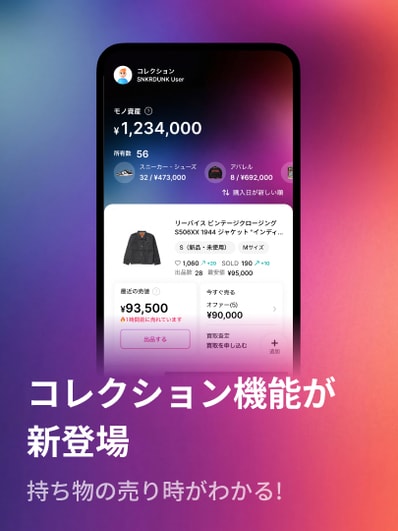
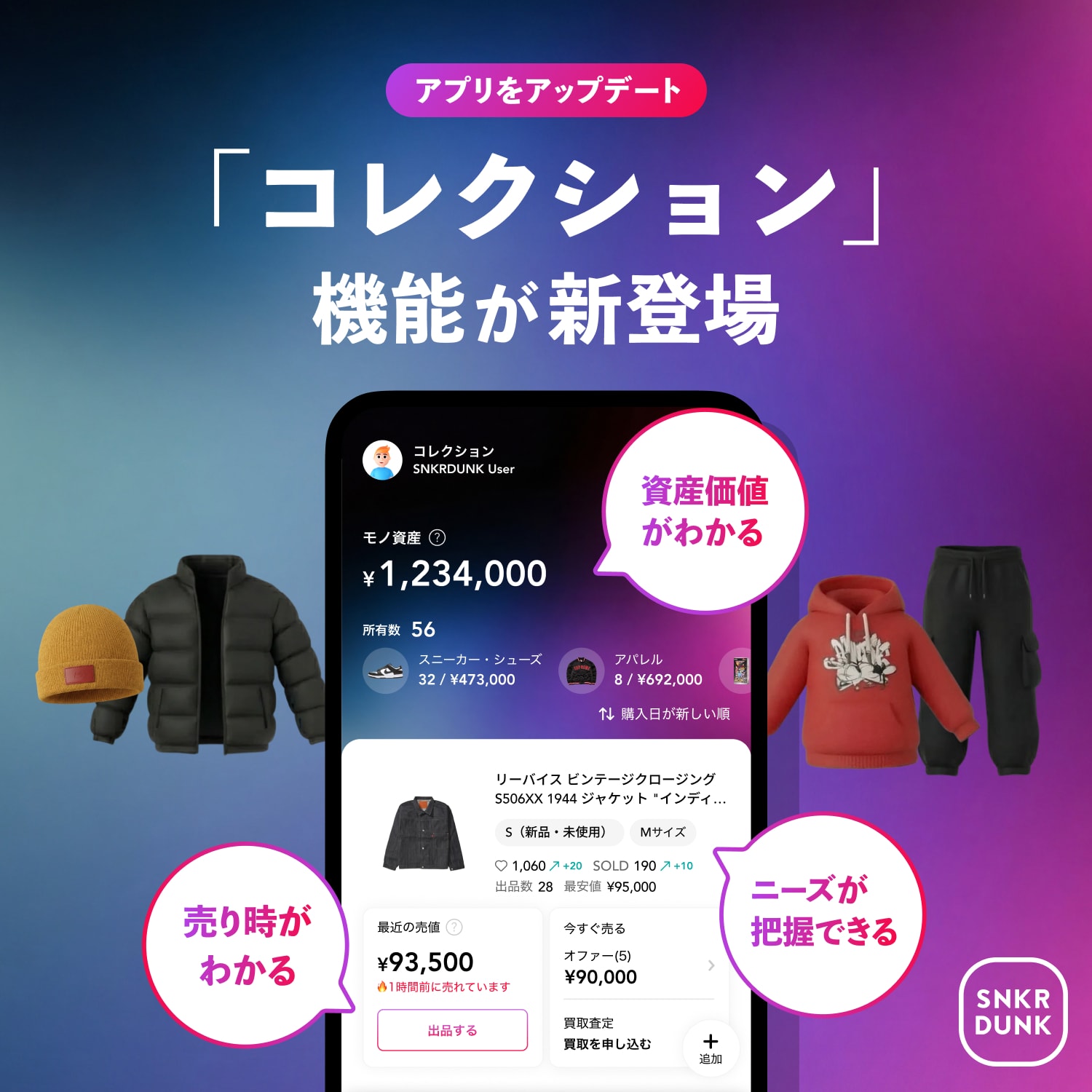
SNKRDUNK, a Japanese C2C marketplace for sneakers, apparel, trading cards, and collectibles operated by SODA Inc., launched Collection, a new feature that allows users to track the real-time market value of items they own.
Launched on April 22, 2026, users can view the estimated market value of items previously purchased on SNKRDUNK or manually registered in the app, along with recent selling prices, making it easier to decide when to list an item for sale. Items purchased through SNKRDUNK are automatically added to Collection after a transaction is completed.
Since in 2019, SNKRDUNK has operated a C2C marketplace for sneakers, apparel, trading cards, figures, and other collectible items. Every traded item is authenticated and inspected by professional authenticators before being delivered to the buyer. The platform has grown to over 6 million monthly users, more than 10 million cumulative app downloads, and over 34 million cumulative listings.

Leveraging Operational Data to Create Customer Value
“Collection” is a new feature on SNKRDUNK that allows users to check the estimated market value, recent selling prices, offer prices, number of Likes, and SOLD counts for items purchased on SNKRDUNK or manually registered. Users can also list those items directly from Collection.
Japan’s resale market reached JPY3.26 trillion in 2024, marking 15 consecutive years of growth. According to SNKRDUNK’s survey, approximately 75% of users want to know the current market value of items they own, around 70% check market prices even when they have no intention of selling, and nearly 60% consider purchased items to be savings or assets. In this market environment, there is growing demand for services that allow users to understand the value of owned items throughout the ownership period, not only when they decide to sell.
The significance of this initiative lies not simply in adding a pricing feature, but in expanding the marketplace into a service that continues to provide value after purchase. While market price information has traditionally been checked mainly at the point of resale, Collection allows users to monitor the estimated value and recent selling prices of items they already own, enabling market information to be used during the ownership period as well.
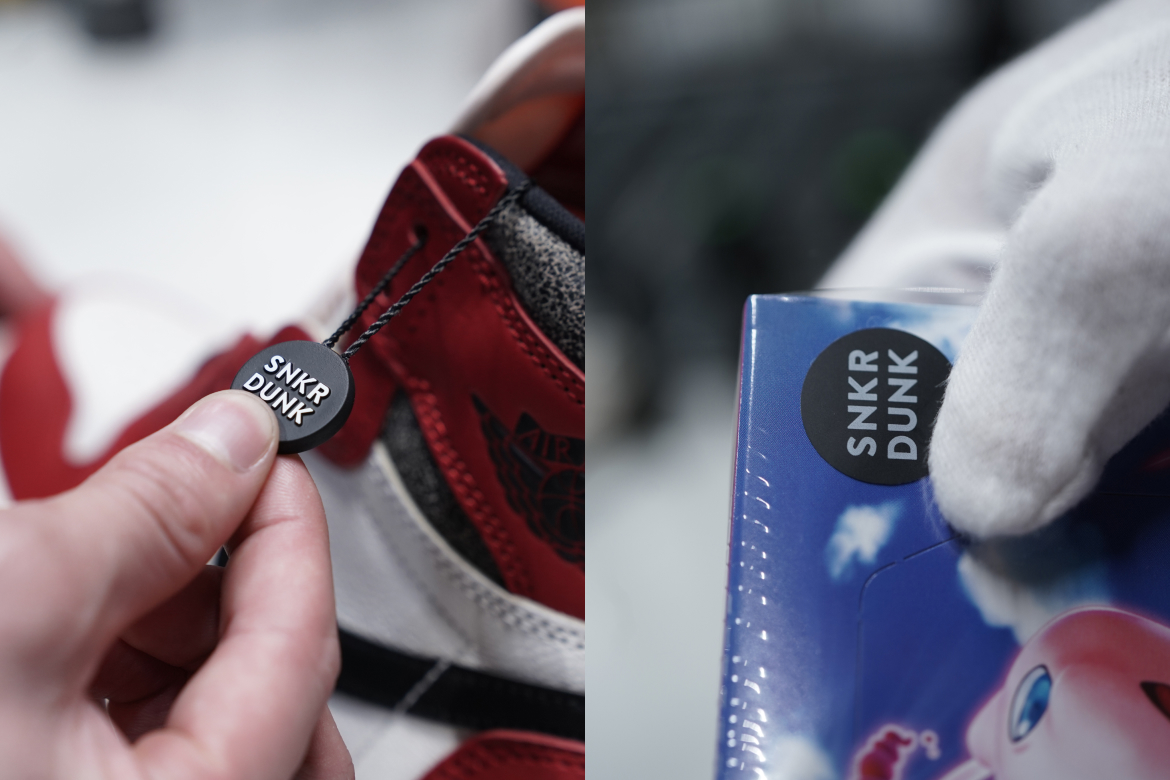
This initiative is supported by SNKRDUNK’s operational foundation. Items listed on the platform are processed through SNKRDUNK BASE, the company's logistics and authentication center where products are linked to transaction data, authenticated, and inspected before being delivered to the buyer. Its authentication process uses tens of thousands of authentication cases, databases of genuine and counterfeit products, and Japan’s only X-ray transmission device. Its quality inspection process is also based on quality data gathered by brand and SKU. Users can check transaction statuses such as “Arrived at SNKRDUNK Office / Waiting for Authentication” and “Authentication Completed,” at which point they receive a notification once authentication is complete. However, SNKRDUNK does not state that users can view detailed authentication dates or authentication history.
The core of this initiative is not the creation of an entirely new service, but the evolution of product and market information gathered through marketplace operations into a service that helps users continuously understand the value of their owned items. SNKRDUNK is not directly exposing internal authentication data or individual transaction records. Instead, it provides useful market information to users based on data collected through daily operations. This ability to convert operational data into new customer value is what differentiates the initiative.
Resale Goods: Thinking Beyond Price
Success in the Japanese market does not come simply from adding new digital features, but from building a trusted transaction environment and a data infrastructure that supports it.
When entering Japan, companies should design not only CRM tools, pricing features, or AI-powered services, but also the operational processes that generate reliable data. For example, standardizing product information and centrally managing transaction histories and product quality data can create a foundation for future services such as price transparency, resale support, portfolio management, and personalized recommendations. Rather than treating these capabilities as standalone features, companies should integrate them into a seamless customer journey that extends from purchase to ownership.
The case also highlights an important characteristic of Japan's reuse market: price alone is not the only source of value. Authenticity and quality assurance are also key factors in customers' purchasing decisions. In categories such as luxury goods, sneakers, and trading cards, where counterfeit risks are high, authentication and quality control should be viewed not merely as back-office operations, but as essential parts of the customer experience that help build trust.
The key lesson for companies is to design digital services with scalability in mind. By building systems that continuously capture and organize product and transaction data through daily operations, companies can create new customer-facing services over time rather than repeatedly launching disconnected features. This case demonstrates that operational excellence can become the foundation for long-term digital innovation and customer value.
Japan's sneaker resale market share: 86%・Monthly active users: Over 6 million・Cumulative app downloads: Over 10 million