
%402x.svg)
OAO Taps Reknowned Interior Designer Daikei Mills
Japanese creative footwear label OAO opened an appointment-only Kyoto showroom in December 2025 inside an unconventional Gion nightlife building.
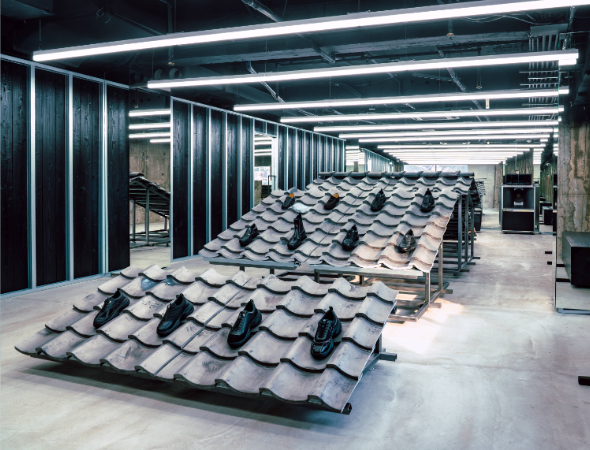
Known for its DTC focus and 'creative foot-gear laboratory' positioning, the interior was designed by Tokyo studio Daikei Mills using reclaimed Kyoto roof tiles and yakisugi (charred cedar) as display surfaces, with exposed walls and vintage speakers.
The showroom represents a deliberate anti-flagship model: an inaccessible location, appointment-only entry, and deep architectural storytelling to amplify exclusivity and craft narrative.

Communicating Exclusivity Through Nuanced Understanding of Culture
OAO's Gion showroom is differentiated on several levels specific to sophisticated Japanese consumers. The appointment-only model communicates scarcity and dedicated hospitality without resorting to price signaling — in Japan, where omotenashi is expressed through undivided attention, a private session is itself a luxury statement.
The location choice is deliberately subversive: Gion, saturated with cultural expectation, is the last place one would expect a contemporary sneaker brand. OAO's director explicitly sought a building that would feel "daunting to enter," acting as a filter for the genuinely curious. The material choices — kawara tiles from actual Kyoto townhouses, Yoshino cedar — perform cultural rootedness without pastiche, signaling that the brand has done the work of understanding place. Together, this is a retail model that rewards discovery over footfall, treating the act of visiting as part of the brand experience itself.
Scarcity and Brand Language
Retail brands in Japan consistently underestimate the strategic value of how and where a space is presented versus what is sold inside.
OAO offers three concrete lessons: First, appointment or limited-access formats build aspirational value far more effectively than open-floor flagships - scarcity signals that both the brand's and consumer's time are worth protecting.
Second, location is an opportunity for a narrative, not just a foot traffic consideration. The Gion location tells a story that Omotesando, Tokyo cannot.
Third, material choices are brand language - Japanese consumers read thoughtful use of local artisinal materials as genuine cultural engagement, not decoration.
For foreign brands, the additional implication is: investing in Japanese architects with cultural fluency (as OAO did with Daikei Mills / Keisuke Nakamura) is a credibility multiplier, not just aesthetic decision.