%402x.svg)
Three-Floor Complex Showcasing All JINS Products and More
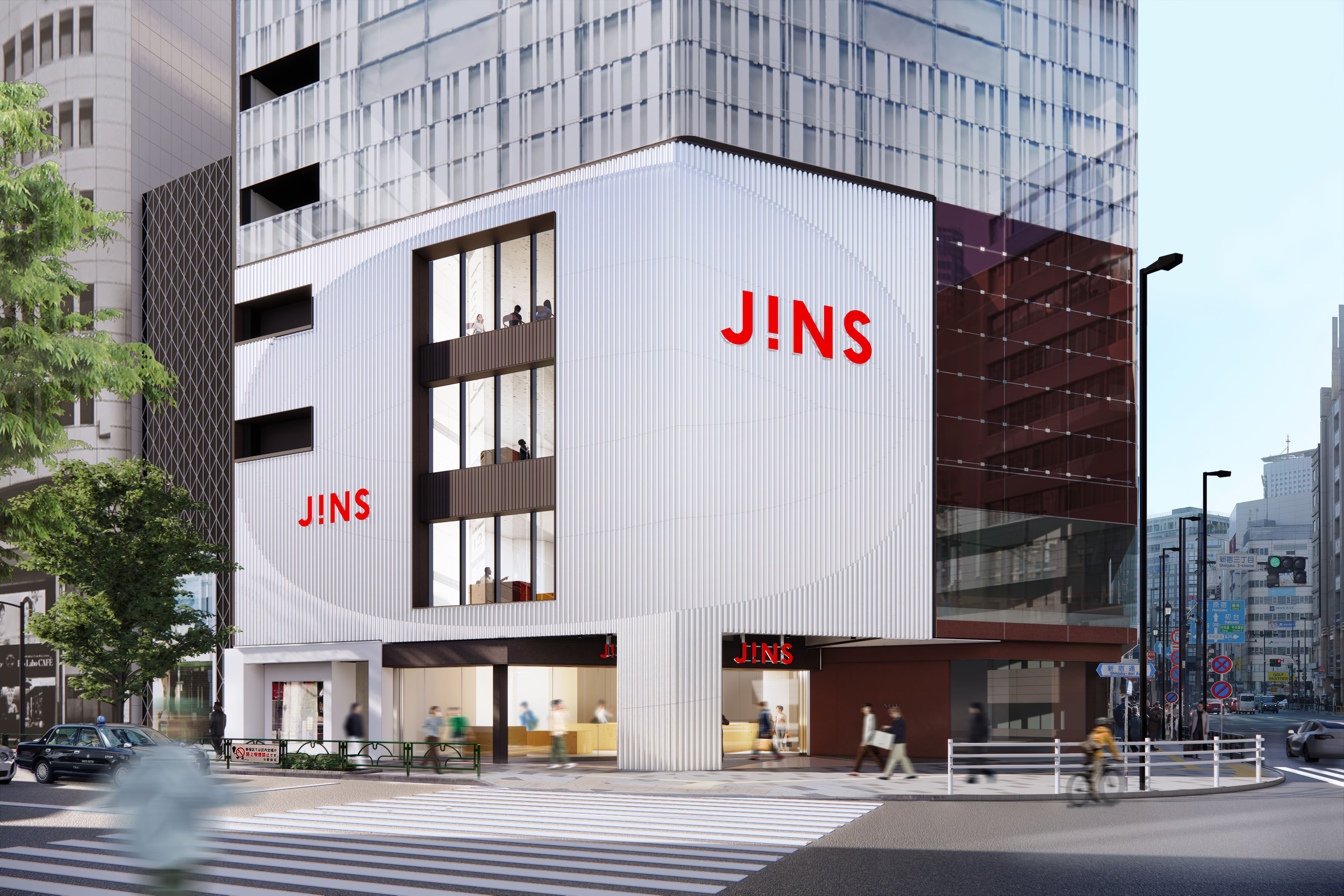
Japanese eyewear retailer JINS, operating approximately 840 stores in Japan and overseas, opened JINS Shinjuku, its largest three-floor flagship store worldwide, at the Shinjuku Sanchome intersection in Tokyo.
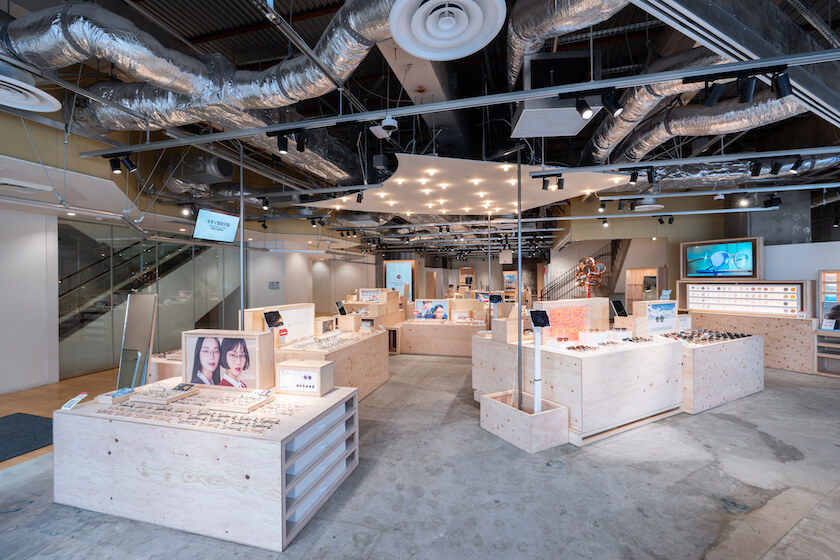
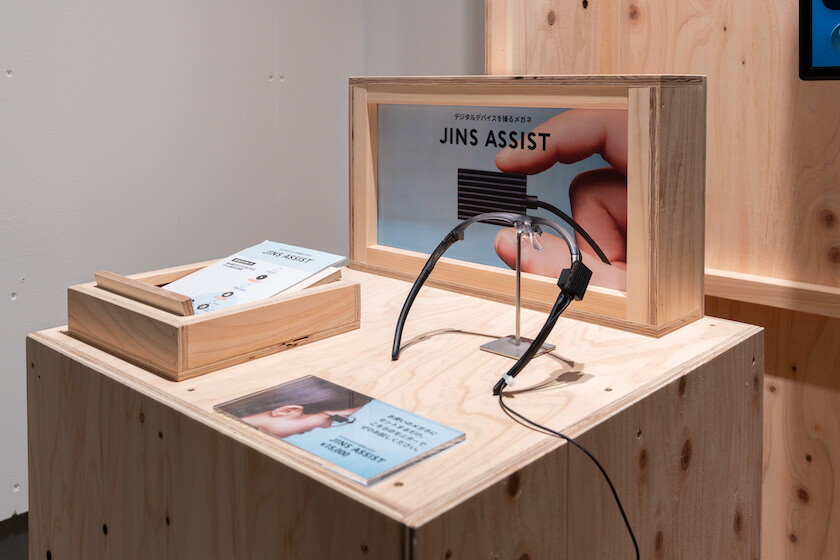
The store, opened on April 23, 2026, spans approximately 1,000 square meters and offers around 1,300 products, making it the company's largest store. Under the concept "Everything, All Here," the store brings together eyewear, contact lenses previously available only online or at select stores, including the wearable mobile device JINS ASSIST.
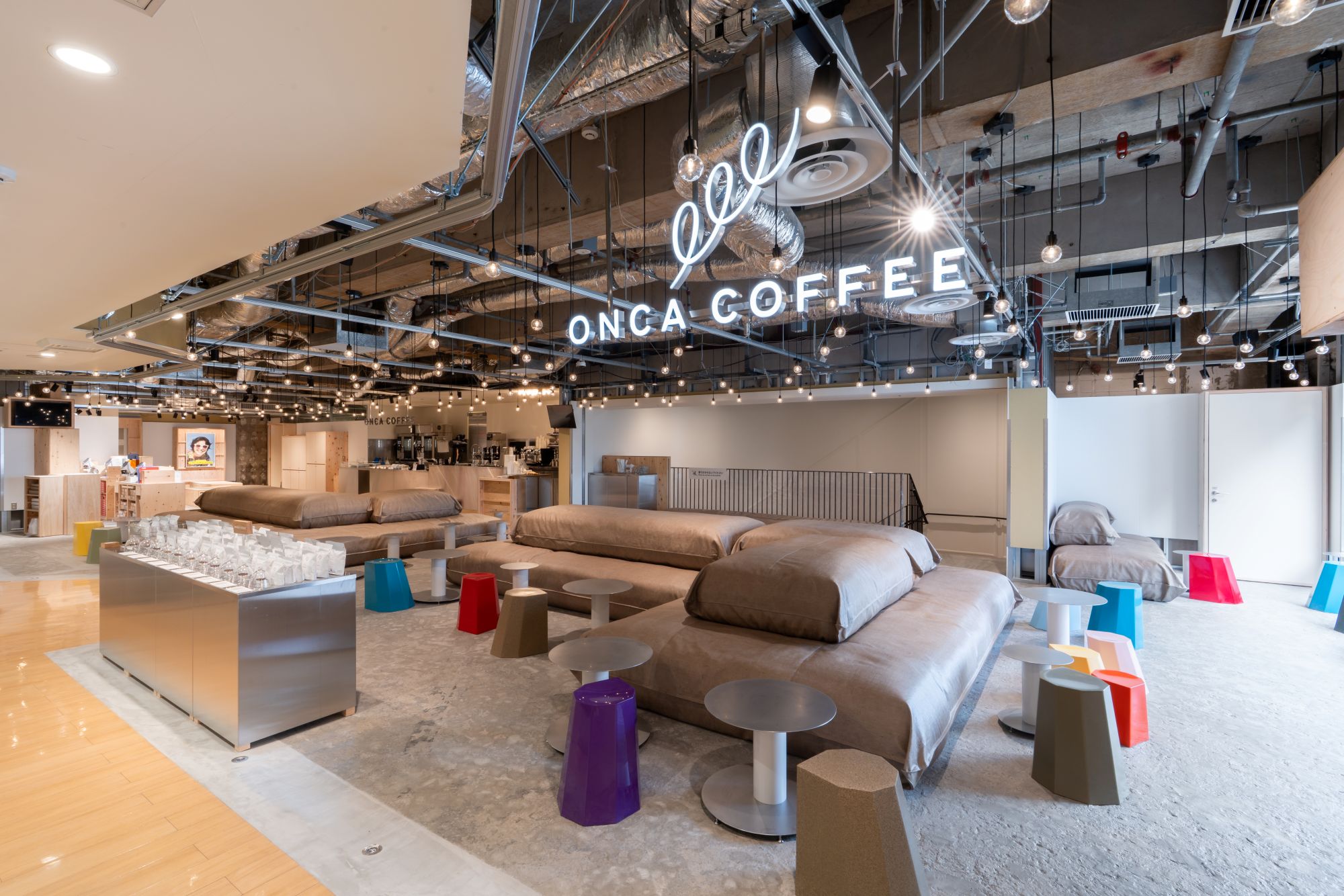
The second floor features the first shop-in-shop for JINS' sister eyewear brand RIM, while the third floor includes the company's in-house café, ONCA COFFEE.
Equipped with nine vision testing stations, the store provides a one-stop experience from eye examinations to lens processing as well as tax-free services for international tourists. The store also permanently displays artwork by contemporary artist Takuro Tamura and introduces multilingual AI terminals and the JINS 30min Night Walk program a virtual local guide offered to international visitors while they wait for their glases to be made.

Aligning Location and Execution to Tell the Brand Story
The significance of this initiative lies in how JINS designed its flagship store not simply to drive sales, but as a space where customers can experience the brand's worldview.
JINS integrates multiple services, such as vision testing, digital technology, personalization services, food and beverage, and product pickup into one store around a shared customer need: vision. This allows the store to provide a seamless customer experience from product discovery and trial to customization and in-store pickup.
By opening in Shinjuku Sanchome, one of Tokyo's major commercial districts, JINS strengthens its brand presence in an environment where fashion, retail, technology, and culture intersect. This flagship functions not only as a sales location for customers, but also as a space that embodies JINS' brand identity and supports the company's global expansion.
JINS Shinjuku also incorporates architecture, art, interior design, and the existing building into the brand experience, to expresses the brand's values throughout the space in a way that products alone cannot fully communicate.
The essence of this initiative is not simply opening a large store, but maximizing the value of physical retail by selecting the most relelevant location, while integrating products, services, technology, space, and customer flow into one cohesive brand experience.
Connecting Product, Service, Education and Personalization Under One Roof
Flagship stores should not be viewed simply as sales channels, but as spaces designed to deliver value that customers cannot experience elsewhere.
For companies entering the Japanese market in particularl, expanding store size or launching limited-edition products alone may not be sufficient. Instead, brands should consider how store design, technology, and location-specific experiences can work together to create clear reasons for customers to visit a physical store.
JINS Shinjuku is one example of this approach. In addition to Shinjuku-exclusive eyewear, the store offers services that are not available in regular stores, including an in-store trial area for JINS ASSIST, a wearable device that allows users to operate digital devices through head movements, the first RIM shop-in-shop, an engraving service, ONCA COFFEE, and contactless PICK UP LOCKER.
The store also uses spatial design as a point of differentiation. Its design concept is based on “reweaving” the relationship between Shinjuku Sanchome, JINS, and the existing building. The exterior uses white aluminum pipes inspired by silk, a material connected to Maebashi in Gunma, where JINS was founded. Inside, the store preserves existing structural elements and reuses wooden boxes, coffee sacks, and even the staircase from the former Burberry store. Through this approach, JINS communicates its history and values through the physical space itself.
From an operational perspective, companies should also design customer journeys that connect product selection, vision testing, product trials, personalization, waiting time, and pickup into one seamless experience. By integrating products, services, technology, and space, brands can create value that e-commerce cannot provide and strengthen the differentiation of physical retail.