
Bringing New Life to Underutilized Office Buildings
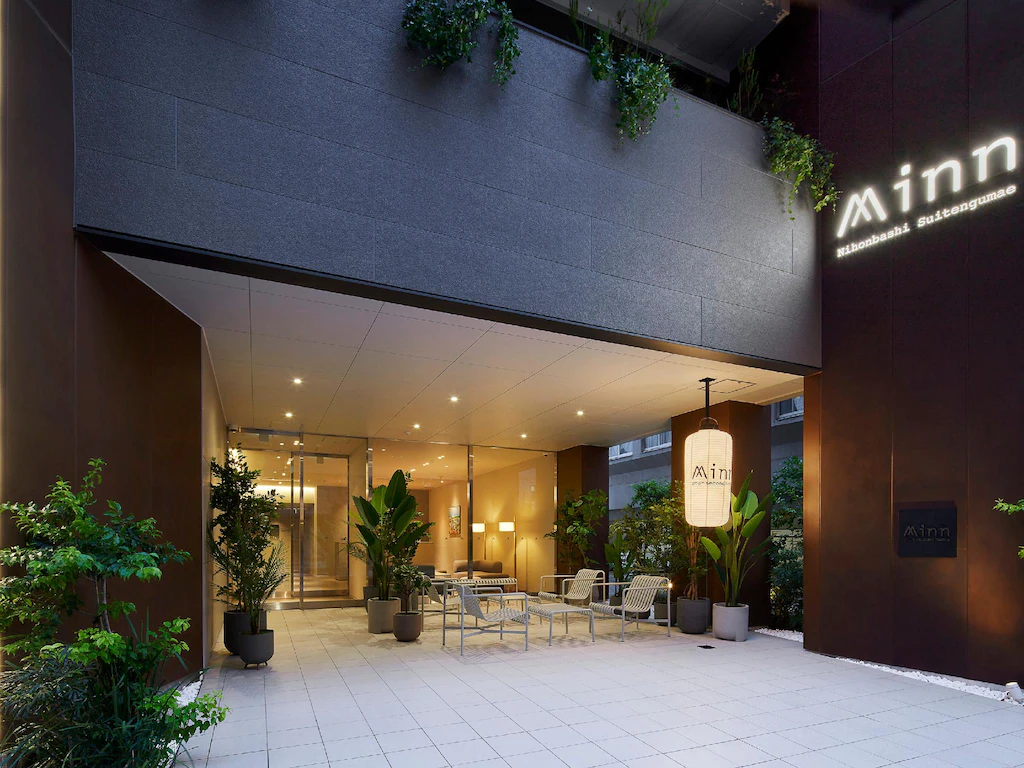
Squeeze, a hotel operator that manages properties across Japan and provides digital hospitality services such as cloud-based property management systems and remote guest support, opened Minn Nihonbashi Suitengumae, new apartment-style hotel facility in Tokyo.
This property, which opened in July 2025, is a converted a former office building. The project is part of the company’s strategy to tackle property conversions by leveraging its hotel operating expertise and technological resources.

Operational Expertise as an Edge
This property demonstrates that enhancing property value goes beyond the building amenities, with clear benefits for businesses converting existing office buildings and adding value through operations. Rather than constructing a new property, Squeeze combines conversion work carried out by a partner company with its own accommodation management and technology expertise to reposition underutilized real estate as a new hospitality asset.
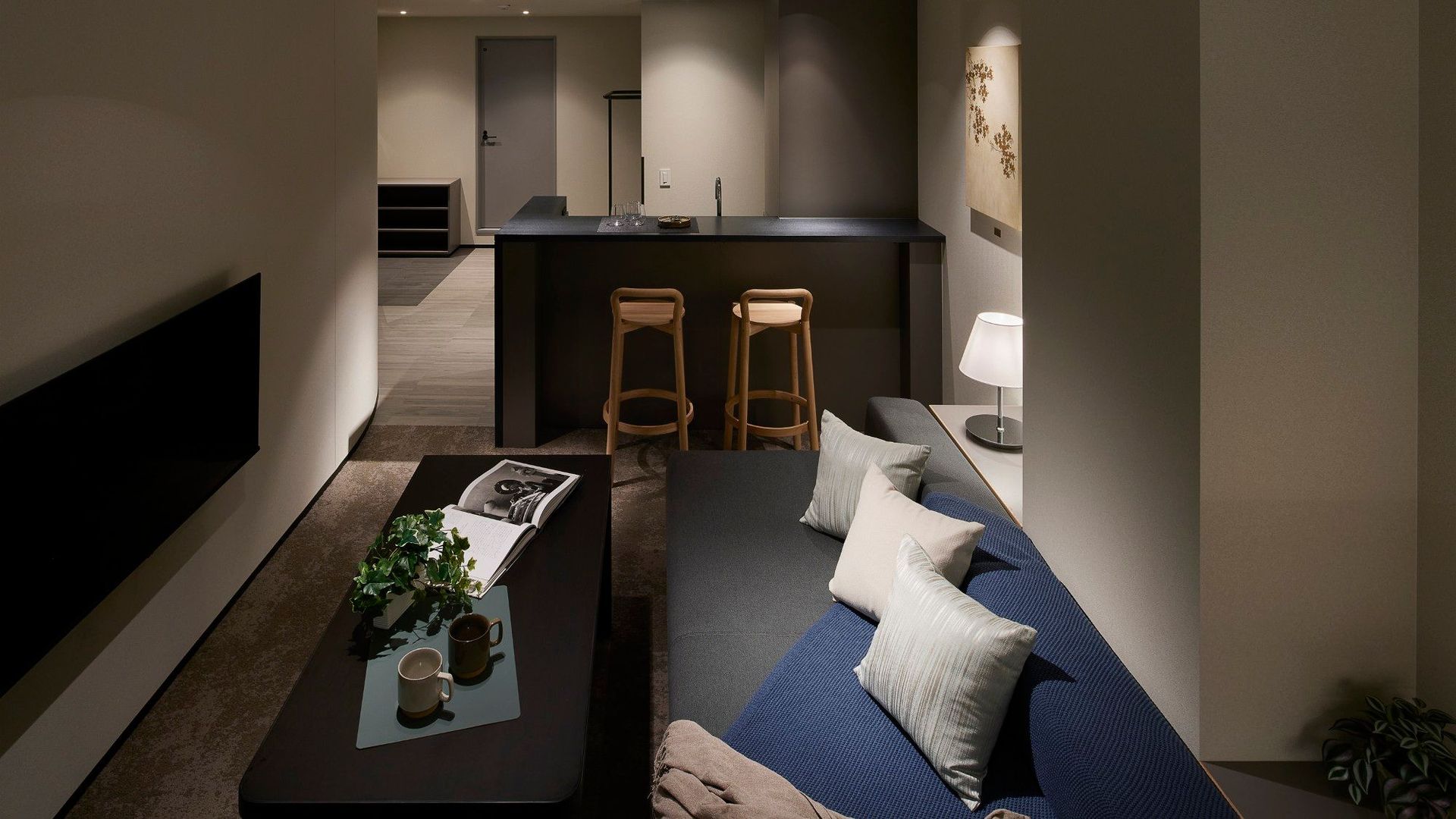
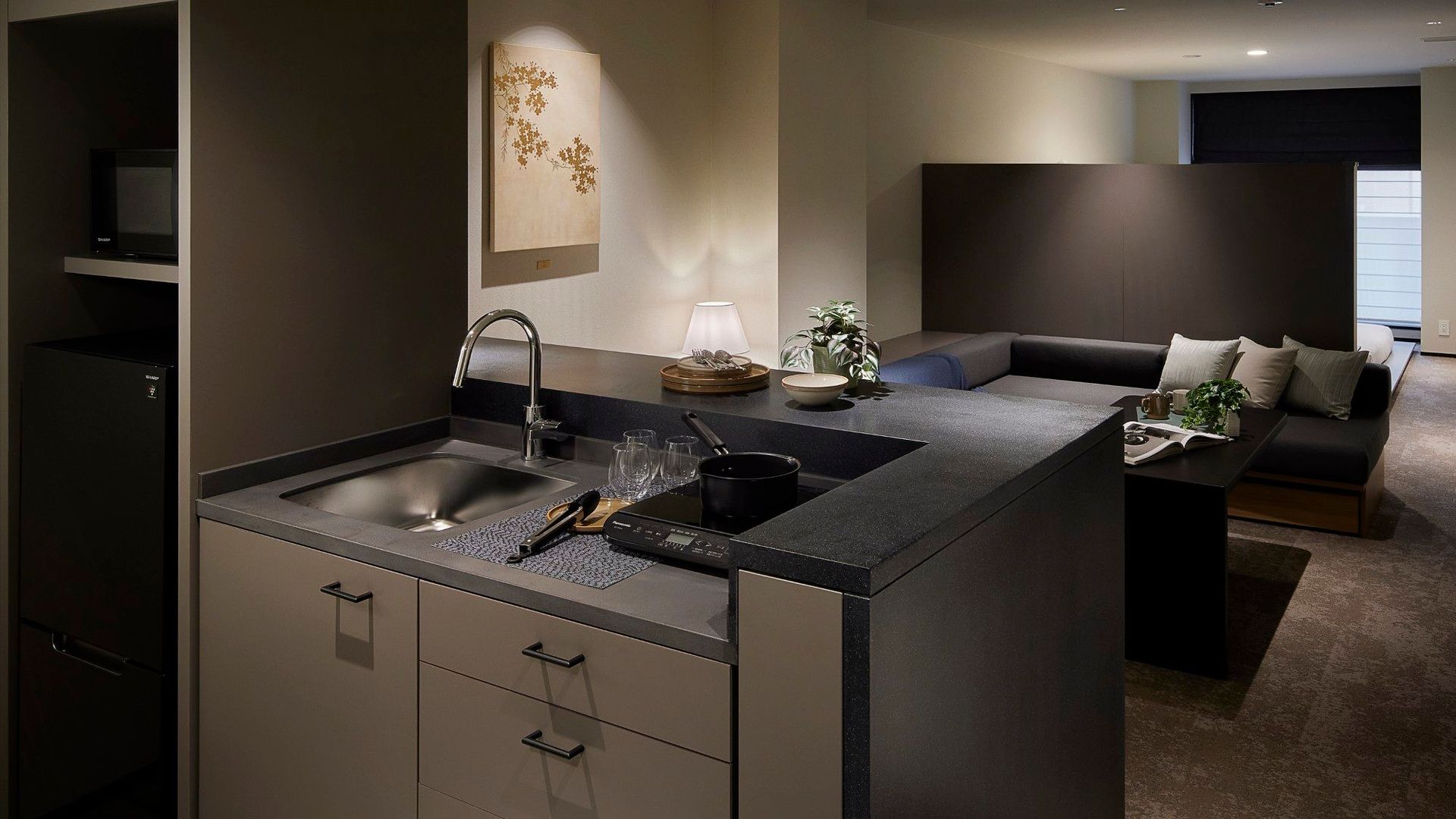
The hotel also differentiates itself by incorporating the characteristics and history of Nihonbashi into the guest experience. Artworks inspired by the area’s history and Japanese culture are installed throughout the lobby and guest rooms, including a contemporary reinterpretation of ukiyo-e, charcoal reliefs made from trees native to Japan, and paintings representing the four seasons. Rather than using local culture only as decoration, the property integrates it throughout the space as part of the overall brand experience.
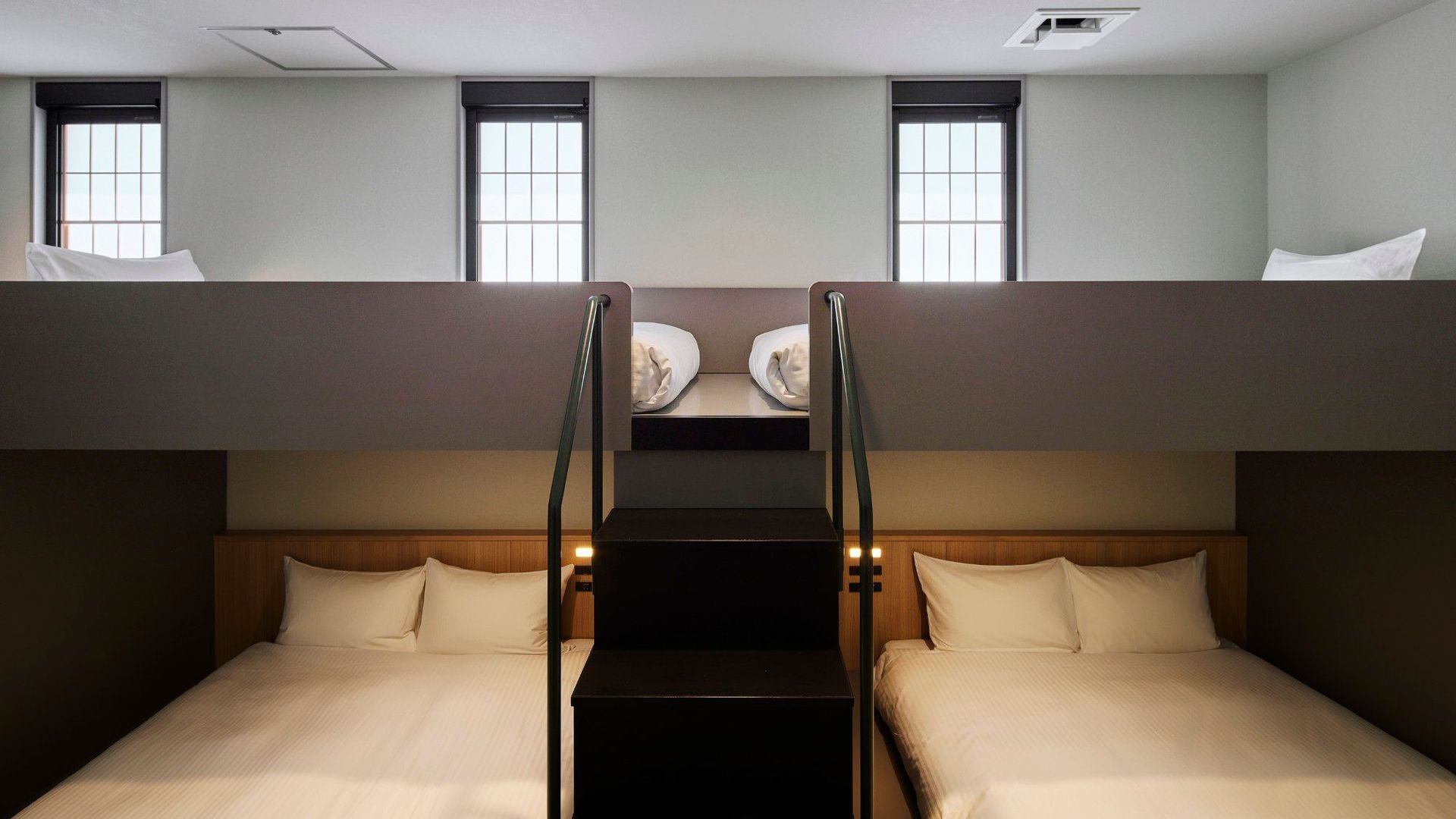
In addition, rooms accommodating up to eight guests, household appliances, children’s amenities in family rooms, smartphone check-ins, keyless entry, and 24-hour cloud reception are combined into an operation model that supports families, groups, extended stays, and workations. The digital functions are not introduced as standalone features, but as part of a customer journey designed to support guests from arrival through departure.
This initiative is not simply strong case for converting an existing building into a hotel, but the integration of location, local culture, room design, and digital operations to deliver the brand concept of “staying as if living there.” In a market where differentiation through the building alone can be difficult, Squeez positions operational design itself as a source of competitive advantage.
Operations Driven Hospitatlity for Best in Class Guest Experience
Entering Japan's hospitality market by seeking out existing office, residential buildings, and commercial properties can become attractive hospitality assets when they are redesigned around how people travel, including their length of stay, group size, convenience amenities, and privacy needs.
When evaluating potential properties, companies looking beyond the building's current use or age will be able to better assess whether the asset can support the desired guest experience through factors such as room size; layouts for groups or families; transportation access; neighborhood environment, and the ability to add the amenities for longer stays. Even properties that no longer meet the needs of their original purpose can be repositioned into competitive hospitality solutions when they are aligned with clearly defined customer needs.
Rather than viewing property conversions as a construction project, proprietors mush design based on how the property will operate - from reservations and check-in to guest support, housekeeping, access management, and check-out - and then shape the physical space around that operating model.
Determining the target audience, the intended stay experience, and the operating model before selecting the the property will ensure that the final experience will be complete and deliver an effortless stay for guests.
In Japan, long-term differentiation is unlikely to come from new or premium facilities alone. Greater value can be created by reimagining existing assets around local context, guest needs, service delivery, and digital operations to create a hospitality experience that cannot easily be replicated elsewhere.
Following its opening, the property achieved occupancy and average daily rates well above the initial business plan and was subsequently acquired by an overseas sovereign wealth fund, demonstrating an increase in asset value. By leveraging the characteristics of an existing building while addressing diverse accommodation needs, the project has been recognized as a successful model for adaptive reuse.