%402x.svg)
Solving for Workplace Needs
Real×Tech LAWSON is a next-generation convenience store initiative jointly developed by KDDI and Lawson that leverages AI, robotics, and digital technologies to enhance customer experience and store operations.
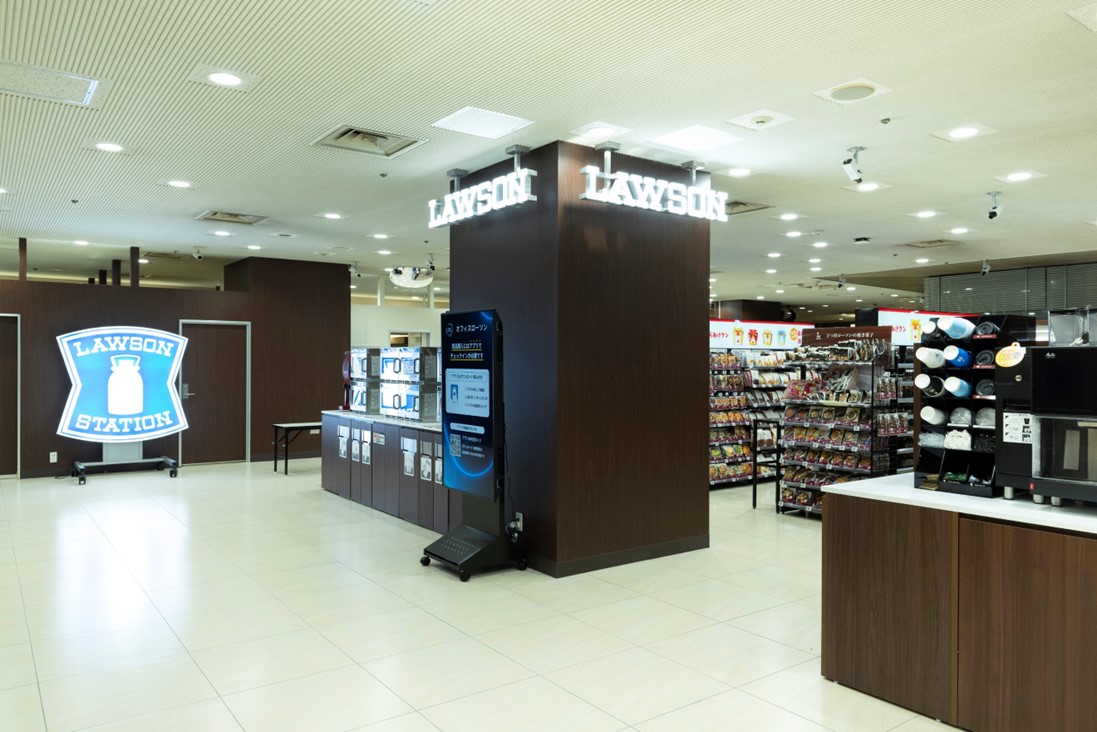
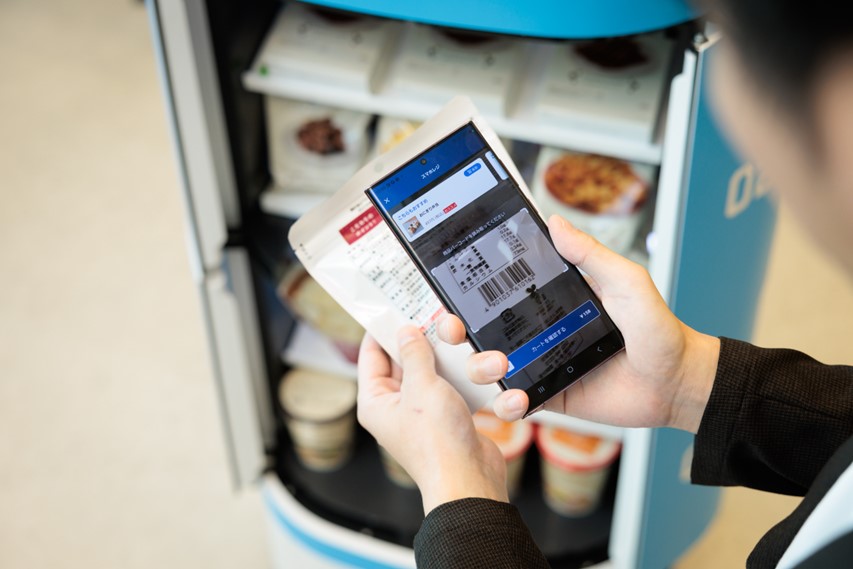
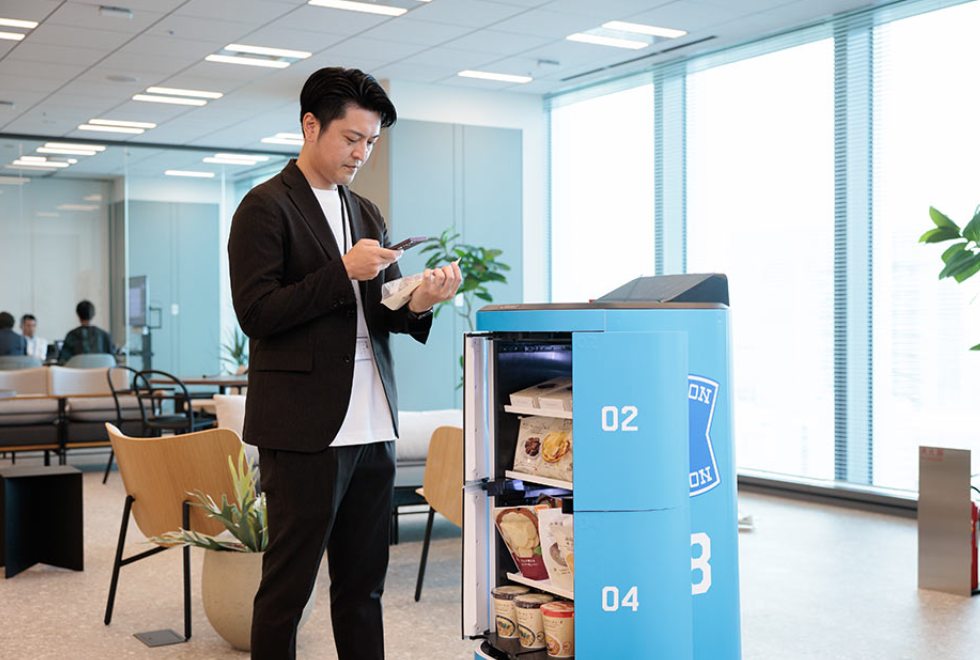
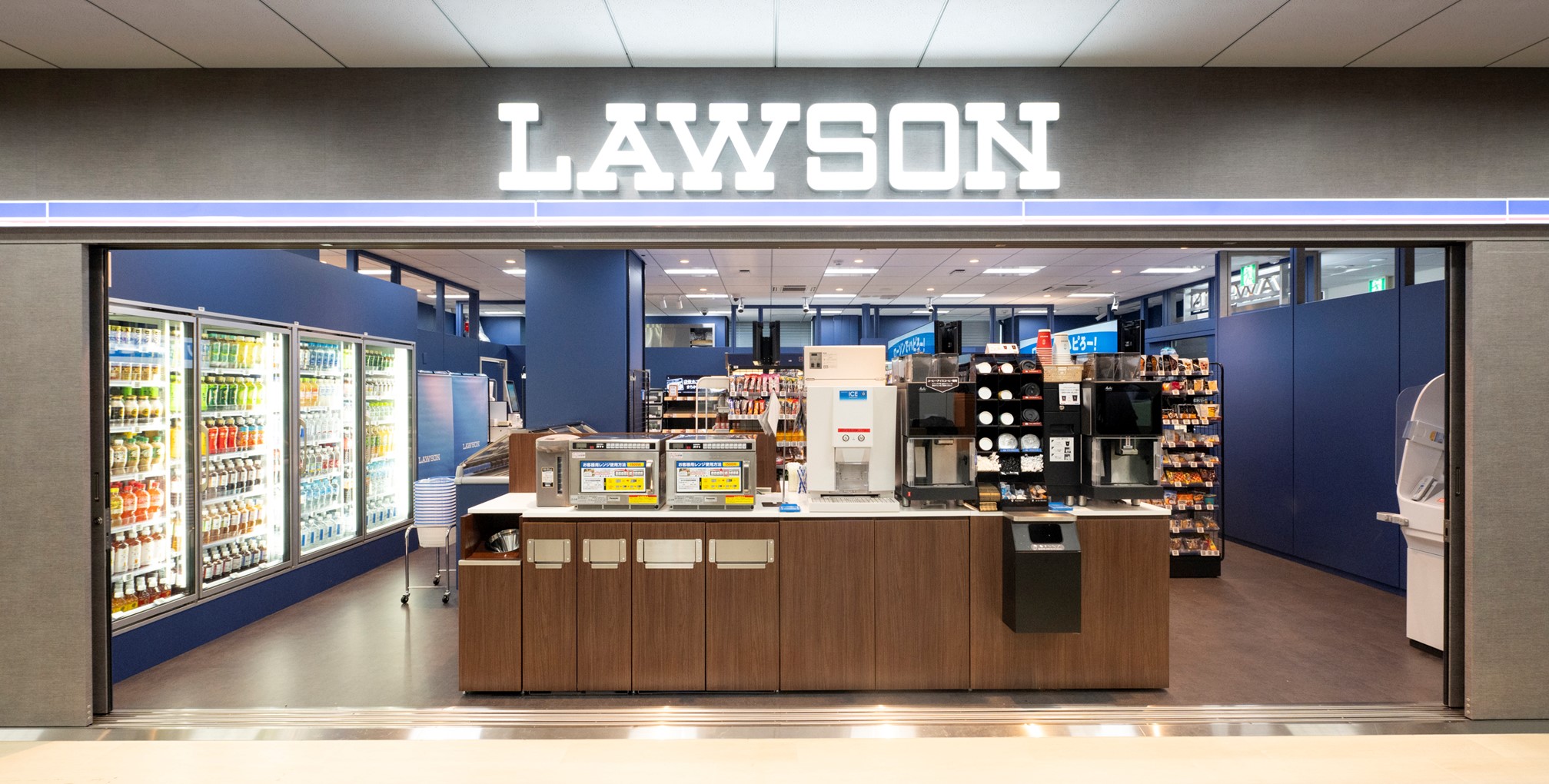
Following the launch of the first public-facing Real×Tech LAWSON store, Lawson Takanawa Gateway City Store in June 2025, KDDI and Lawson expanded the concept into employee-only office environments. The first office-focused location, Lawson S KDDI Takanawa Headquarters Store, opened in July 2025 and serves as a testing ground for advanced DX initiatives, including smartphone-based checkout, delivery robots, AI-powered shelf monitoring, automated stock replenishment, and shelf optimization technologies.
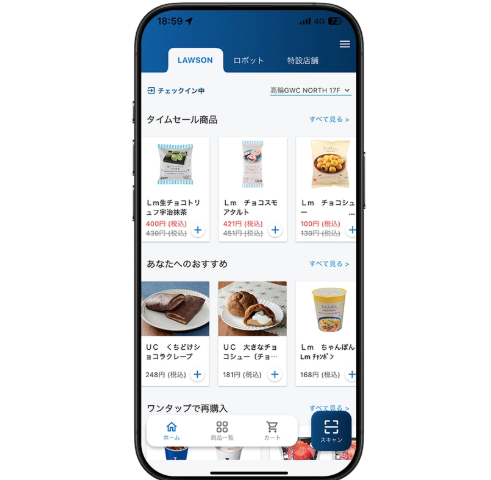
In December 2025, the companies opened the Lawson KDDI Osaka No. 2 Building Store, also a workplace retail initiative where the Office Lawson App reduced average shopping time to 2.5 minutes. In February 2026, they launched the Lawson KDDI Shinjuku Building Store, which became the first workplace-focused Real×Tech LAWSON location to offer 24-hour operations, including unmanned nighttime service.
Unlike the public-facing Takanawa Gateway City Store, all three workplace locations operate exclusively on employee-only office floors and are not accessible to the general public. Through these initiatives, KDDI and Lawson aim to develop a convenience store model tailored specifically to office environments. The companies plan to continue refining usability and convenience based on employee feedback while actively testing advanced technologies, and exploring opportunities to expand the concept to other corporate environments in the future.

Learning From and Building Trust with Employees
This initiative aims to enhance productivity and convenience for office workers, perfectly aligning the long hours of work culture and convenience store dependent culture. In fact, a survey of 10,000 KDDI employees revealed that approximately 90% use convenience stores daily, with many citing lunchtime congestion and long queues as significant stressors.
By introducing mobile checkout systems and delivery robots, this initiative provides a contactless, remote, and high-speed purchasing experience that directly reduces time loss and stress. Furthermore, the high adoption rate of mobile payments in Japan and the public’s receptiveness toward cashless transactions and new technology act as strong tailwinds. Additionally, offering employee benefits—such as discounts and coupons via integrated employee ID verification—aligns well with the emphasis on employee satisfaction typical of Japanese corporate culture.
What sets this initiative apart from other industry examples is its unique corporate partnership model. While major convenience store chains (e.g., 7-Eleven, FamilyMart) implement advanced technology for the general public, these stores are designed for a restricted office community and is built to integrate internal company data. For example, distributing coupons linked to the KDDI employee app and employee ID is a feature not typically found in standard convenience stores. This focus on data utilization within a closed office environment and the pursuit of highly efficient operations are the key differentiating factors for this project.
One of the most important lessons from this case is the need to deeply understand the target customer—in this case, office workers. Employees value convenience, speed, and efficiency, especially during limited break times. In Japan, lunchtime congestion is a common challenge, making solutions such as smartphone checkout, cashierless operations, and in-office delivery services highly attractive. In addition, Japanese consumers have diverse needs, including health-conscious purchasing and cost-saving preferences. Personalized promotions, product recommendations, and app-based discounts can help address these needs while improving employee satisfaction.
Another key takeaway is the strategic use of technology. Features such as mobile self-checkout, autonomous operations, delivery robots, and AI-driven recommendations are already becoming mainstream in Japan. As a result, foreign companies should focus not only on adopting these technologies but also on combining them to create unique customer experiences. For example, integrating employee IDs with loyalty programs, wellness initiatives, or personalized benefits could generate additional value in workplace environments.
Finally, the operating model itself provides valuable lessons. By using employee-only office environments, KDDI and Lawson are able to test new technologies and store concepts while collecting feedback from a clearly defined user group. For example, smartphone checkout and personalized recommendation features allow the companies to better understand user preferences and adoption of new technologies. Similarly, the 24-hour unmanned operations being tested at the Shinjuku store provide insights into which tasks can be automated and where human involvement may still be necessary. While these initiatives are currently focused on office environments, some of the learnings may have broader applications for retail. Insights related to customer convenience, operational efficiency, and technology adoption could potentially inform future consumer-facing store formats.For foreign companies, this case highlights the value of using a controlled environment to test innovations, gather user feedback, and refine operations before expanding to a larger scale.