
Mobile and Cross-Vendor Ordering for Building Employees
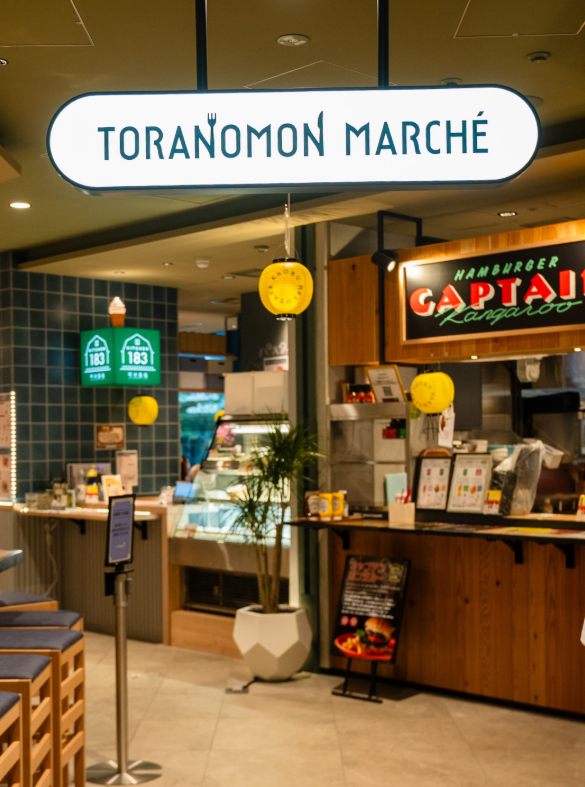
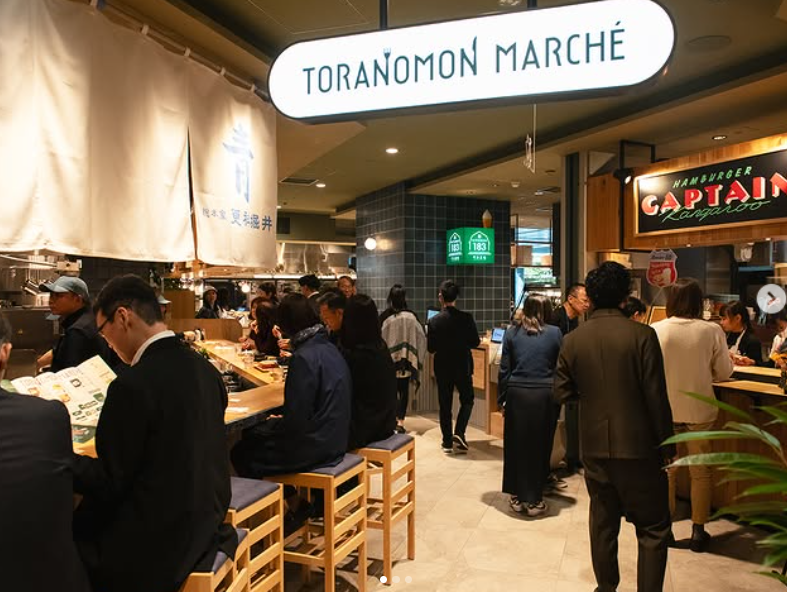
In November 2025, real estate developer Nippon Steel Kowa Real Estate opened Toranomon Marché, an 11-tenant food hall on the first floor of Toranomon Alcea Tower in Tokyo. The food service facility has a total floor area of 618 square meters (approximately 6,654 square feet) and brings together a diverse mix of restaurants serving lunch and dinner.
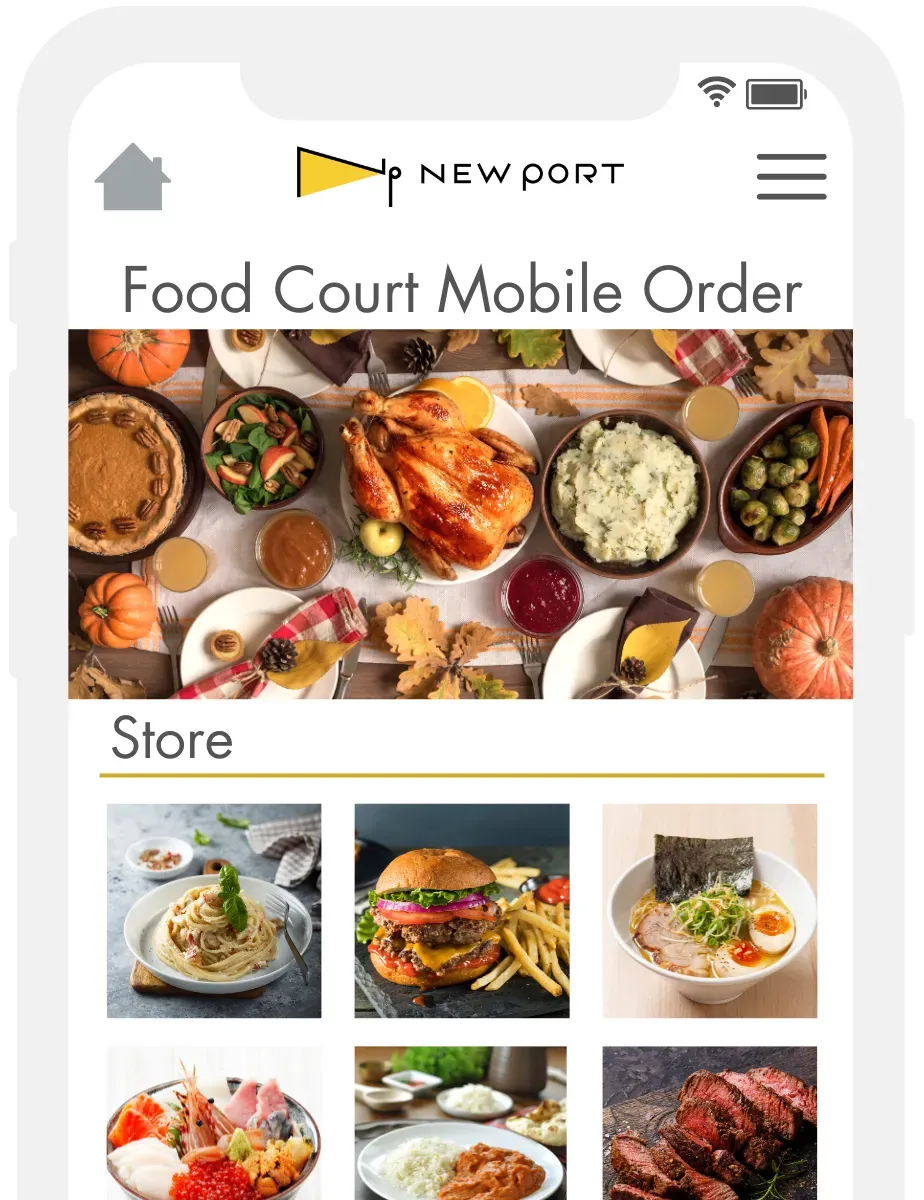
All tenants use New Port, a mobile ordering and digital operations platform designed for office buildings and commercial facilities. Customers can order and pay via smartphone, and its cross-store ordering function allows them to purchase items from multiple restaurants in a single transaction. The platform also supports multilingual translation, making the service accessible to both Japanese and international office workers and visitors.
Additionally, the facility operates a satellite bento sales service on the 22nd-floor of the building, where employees can purchase boxed lunches prepared by restaurants in the food hall without traveling down to the first floor. This enables office workers to make more efficient use of their limited lunch breaks while improving the overall convenience of the workplace dining experience.

Addressing Meal Time Rush at the Larger Scale
The introduction of mobile ordering itself is nothing new, but this initiative demonstrates how an entire food service experience was designed around the specific lunchtime needs of a high-rise office building.
At Toranomon Alcea Tower, a large number of office workers move at the same time during lunch hours, making elevator congestion a major challenge. In response to the question, “How can lunch be provided more efficiently?”, the facility introduced a system that allows users to place and pay for their orders during less busy periods and quickly collect them upon arrival.
What differentiates this initiative is that it improves not only the ordering process but the user’s overall journey. For example, the “cross-store ordering” function allows users to purchase items from multiple restaurants in a single transaction, eliminating the need to place separate orders on separate vendor pages. Additionally, a satellite location on the 22nd-floor office level allows customers to purchase boxed lunches from the food hall vendors, whilst eliminating travel down to the food hall level, saving on time and eliminating unnecessary congestion.
Rather than treating the food hall as the service are, this initiative treats the entire building as one service area, designing digital ordering and order distribution as an integrated system. Its success lies in adapting the service to the specific structure and user behavior of a high-rise office building, which also differentiates it from conventional mobile-ordering initiatives.
Digital Tools to Improve Service Quality,
This initiative demonstrates that entering the Japanese market requires more than simply introducing a competative digital product. It is important to understand how customers use services within time constraints of Japanese work life and to design store operations and customer journeys around their actual behavior.
In particular, when targeting busy workers in urban office buildings, companies must create systems that reduce wait time and travel that make transactions effortless during short lunch breaks. By combining mobile ordering, advance payment, and carefully planned pickup locations, the Toranomon Marché Food Hall is reducing the hassle of queues and getting around in the building while improving customers’ time efficiency.
From a store operations and customer service perspective, digitalization should not be used merely as a way to reduce labor costs. It presents an opportunity to create an environment in which staff can focus on higher-value tasks.
By streamlining routine processes such as order-taking and payment, employees can spend more time not only on food preparation and product delivery, but also on providing higher-quality customer service. In this case, eliminating the need for staff to take orders created more operational flexibility. Although customers were originally expected to collect their own food, staff began voluntarily delivering meals directly to their tables. By using the time created through greater efficiency for customer service, companies can provide an experience that exceeds expectations. When selecting technology, companies can take into consideration not only improving operational efficiency, but also how the additional capacity can lead to enhancing service quality and customer satisfaction.
・Over 2,000 registered users within six months of opening.