%402x.svg)

An Opportunity to Showcase Product Experience Content
"haru" is a 100% naturally derived personal-care brand founded over 10 years ago by Takako Samejima following her first childbirth, centered on its bestselling "kurokami scalp" all-in-one shampoo.
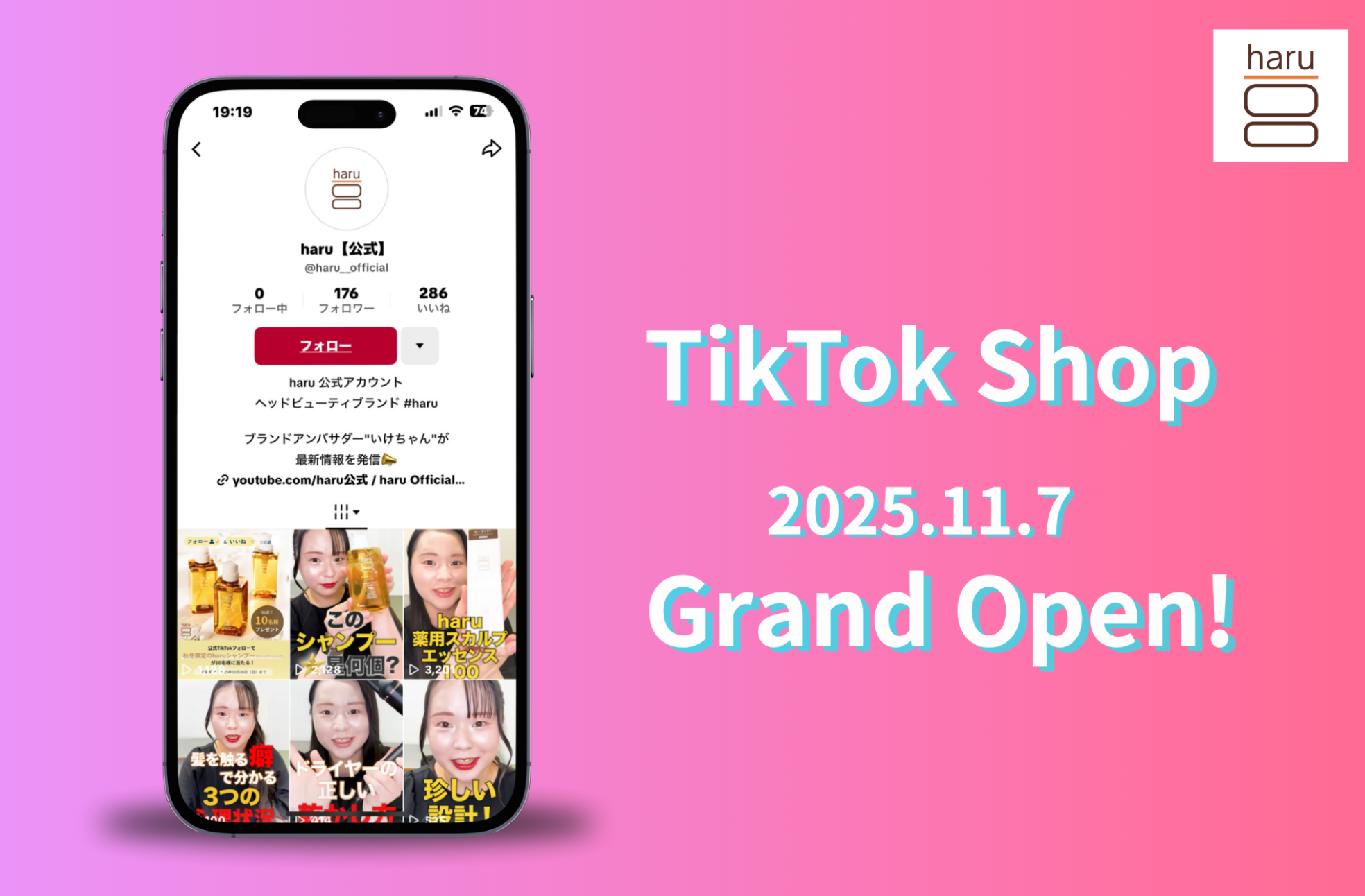
While primarily focusing on its D2C e-commerce platform alongside limited distribution in lifestyle stores like Loft and Tokyu Hands (intentionally avoiding mass drugstores), the brand officially opened its grand TikTok Shop on November 7, 2025, following a Qoo10 launch earlier in the year.
The company positions the TikTok Shop as a strategic hub not just for sales, but to communicate its "head beauty" concept and to promote routine self-care practices. On launch day, the brand hosted a live commerce event featuring a former Omotesando professional hair stylist as its brand ambassador. By demonstrating head massage techniques in real-time, the stream successfully delivered the experiential value of product use cases which traditional product descriptions alone cannot fully convey.

Lowering Perceived Risk and Addressing Unknown Factors
The strategy behind "haru" creating a TikTok Shop appears to address purchase-intent barriers by providing experiential, "watch-and-learn" video content. Recent macro trends suggest that TikTok Shops in general see strong transaction volumes driven directly by content engagement.This platform characteristic may highly complement premium all-in-one shampoos, which inherently face high consumer skepticism regarding efficacy.
Japanese consumers heavily prioritize whether haircare products fit their specific hair needs and price-value expectations. Consequently, real-time demonstrations of scalp massages can serve as an effective approach; they visually communicate texture and results that standard text cannot convey, while showing the product's underlying logic and ease of use. This experiential storytelling likely lowers the psychological risk of "will this work for me," mitigating consumer hesitation and naturally facilitating purchasing paths driven by content engagement.
A key takeaway for foreign brands from this initiative is understanding how to integrate local communication trends and consumer behaviors when utilizing live-streaming formats in Japan.
One analyzed trend highlights the compatibility between attentive, two-way interactions—reminiscent of traditional hospitality—and live streams. Depending on a brand's unique identity and target audience, designing appropriate levels of interactive communication can be a strategic consideration.
Additionally, leveraging the market’s strong reliance on peer reviews presents another viable option. As platforms optimize for this localized demand by increasing the visibility of reviewed products, incorporating tactics such as addressing real-time viewer feedback or introducing verified user reviews during a stream may enhance credibility.
For foreign brands expanding into live commerce in Japan, the value lies in exploring how to blend localized review cultures or interactive touchpoints with their own brand narrative, serving as a practical reference for building consumer reassurance.