
Redesigning and Reimagining a Popular but Misunderstood Product
Otsuka Pharmaceutical, a leading Japanese healthcare and pharmaceutical company, manufactures CalorieMate, a functional food manufacturer offering balanced nutrition in convenient formats.
CalorieMate Jelly is the brand's drinkable jelly-type product, developed as a meal replacement that provides the five essential nutrients (proteins, carbohydrates, fats, vitamins, and minerals) in an easy-to-drink format, particularly for consumers with busy lifestyles or when consumers have a reduced appetite.
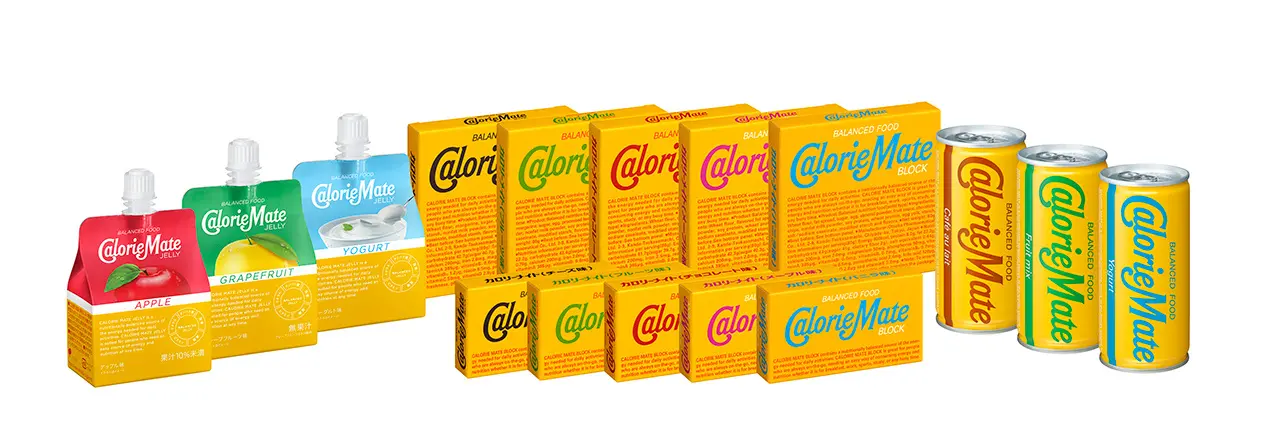
March 16th, 2026, the company recently revamped the CalorieMate Jelly lineup for the first time in approximately 10 years, updating both its packaging design and product formulas.
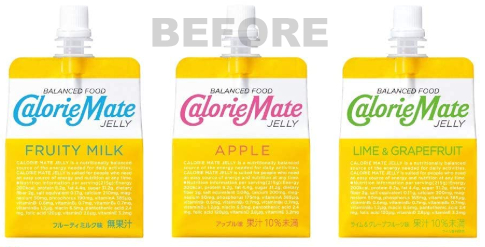
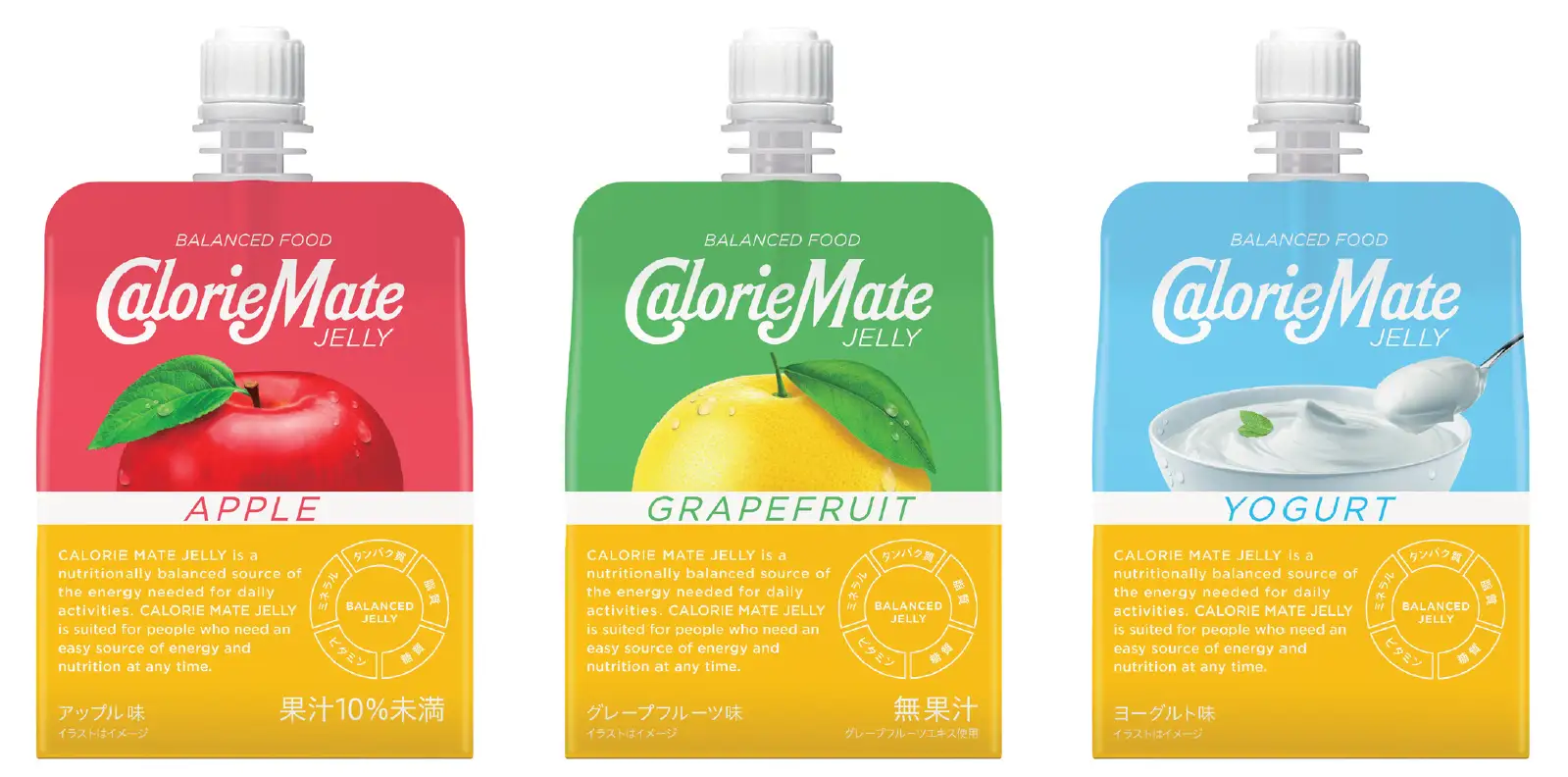
While the Apple flavor remained unchanged, the "Lime & Grapefruit" and "Fruity Milk " flavors were discontinued and replaced with "Grapefruit" and "Yogurt" flavor respectively.
The product names were also simplified, and the packaging was redesigned with fruit and yogurt illustrations, making each flavor easier to identify at a glance.

Addressing Consumer Perception Challenges
While this re-launch represents a packaging and formula update, Otsuka Pharmaceutical took the opportunity to improve challenges customers faced with product selection across all touchpoints including product design, marketing and distribution.
Before the packaging update, Otsuka Pharmaceutical had received feedback that consumers had difficulty imagining how the product would taste. the original packaging was kept simple and on-brand with the brand colors and type, but no imagery to communicate the flavor or contents of the product.
In response, the company reviewed the flavor lineup while keeping the Apple flavor unchanged, simplifying product names, and redesigned the packaging with fruit and yogurt illustrations. As a result, the product communicated its flavor more intuitively without changing its core functional value.
The objective of this initiative was not to change the product's value itself, but to improve how that value was communicated. Alongside the product line renewal, Otsuka Pharmaceutical launched television commercials, digital advertising, transit advertising, outdoor advertising, and product sampling to more than 100,000 consumers. The campaign consistently highlighted not only the product's functional value of providing Five essential nutrients (proteins, carbohydrates, fats, vitamins, and minerals) in a convenient format, but also its taste and flavor.
By aligning product design, packaging, advertising, and distribution, the company expanded the product's availability beyond major convenience stores into supermarkets, mass retailers, and drugstores. As a result, consumers had more opportunities to encounter the product, and the number of purchasers increased significantly.
When Localization and Context Matters
When entering the Japanese market, it's important to understand that successing can require more than using product names and packaging brought over from their home markets.
Companies must evaluate whether consumers can immediately understand a product’s flavor, purpose, and benefits the moment they see it on the shelf. Additionally, difficult to pronounce flavors or colors can lead to further confusion or resistence.
This case suggests that even if a product is recognized for its quality or value, consumers are less likely to consider a purchase it if they cannot easily understand or imagine the benefits. Particularly for food and beverage products, companies should not rely solely on abstract product names or functional claims. Instead, it is beneficial to combine product names, colors, illustrations, photography, and taglines to help consumers intuitively understand the product’s flavor and use case scenarios.
Additionally, a sampling campaign has benefits of being more than building brand awareness. Companies must consider context around the specific moments when customers are most likely to need to product. For example, major train stations and business districts are suitable for communicating convenience to busy professionals and daily commuters, while shopping malls can be a prime location for highlighting family-oriented benefits to parents with young children.
By tailoring both the location and the message to specific customer segments, brands can make their product feel particularly relevant. Rather than distributing samples simply in high-traffic areas, companies building a marketing campaign around their target customers' daily routines and behavioral needs will build better traction within the Japanese market.